How to Choose an Orchid at the Grocery Store That You’ll Enjoy Long After It Blooms
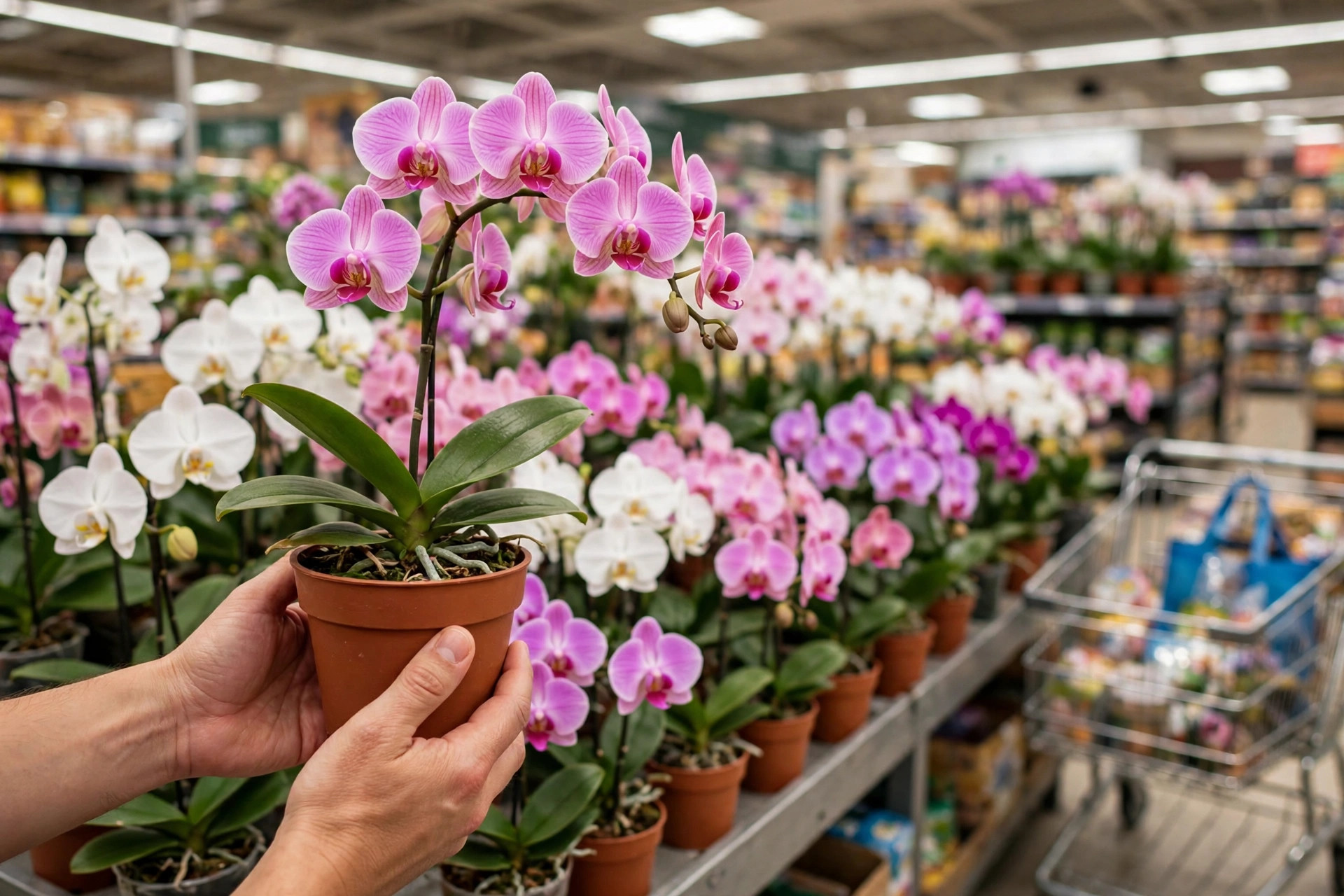
The grocery store orchid display is designed to stop you mid-errand: a drift of white, pink, and purple blooms between the bananas and the greeting cards. And here is the secret the display doesn’t tell you — the prettiest plant in full flower today is often not the one you’ll enjoy longest.
Almost every orchid on that table is a moth orchid (Phalaenopsis), grown by the thousands precisely so it can go home in a shopping cart. They are tougher than their reputation. The difference between the plant that’s still blooming in two months and the one that’s bare by next weekend is mostly decided in the five minutes you spend choosing. Here is what Dorina Benvin — The Orchid Whisperer — looks for.
Count buds, not blooms
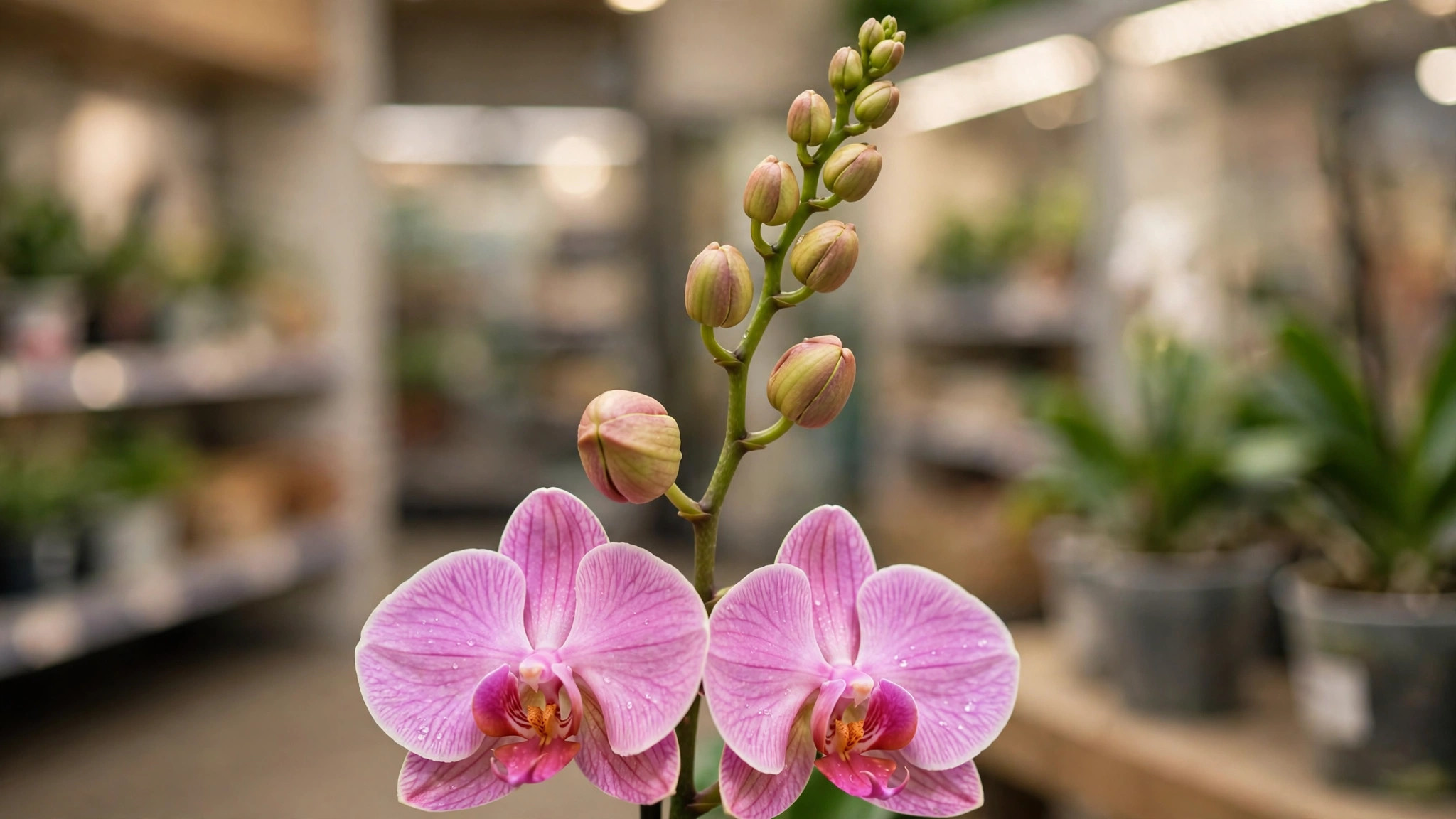
An open flower is a flower already spending its display life. A firm, swelling bud is a flower still to come.
So do the math on the spike: a plant with four open blooms and eight tight buds will out-bloom a plant with eleven open blooms and one bud — by weeks. The all-blooms plant is at its peak in the store, which means its peak happens in the store. Choose the plant whose best days are still ahead of it, and let the peak happen on your windowsill.
While you’re counting, look for a second spike, or a branch forming on the main one. Two spikes are two shows.
Read the leaves
Leaves are the plant’s report card, and they can’t fake it:
- Firm, smooth, and green — yes. A healthy phalaenopsis leaf feels almost like a succulent’s: plump and cool.
- Wrinkled or leathery — the plant has been thirsty for a while. It may recover, but you’re adopting a patient, not picking a plant.
- Yellow or spotted — pass. One aging bottom leaf is normal; yellow creeping up the plant is not.
- A black or soft spot at the crown, where the leaves meet — walk away. Crown rot is the one problem a new plant rarely comes back from.
Do the root check
Grocery orchids usually grow in a clear inner pot, and that plastic is your X-ray. Lift the plant out of its decorative sleeve and look:
- Plump green or silvery roots winding through the bark — exactly right. (Green means recently watered; silver means thirsty but healthy.)
- Brown, black, or mushy-looking roots, or a sour smell from the pot — the plant has been sitting wet. Pass.
- Roots escaping over the rim — don’t let them scare you. Aerial roots are normal, even cheerful. The plant is exploring, not escaping.
Also give the pot a quiet sniff and a glance at the medium. Bark that looks fresh and chunky is good. Sphagnum moss is fine too — many growers use it — just know a moss-packed plant needs a lighter hand with water at home, because moss holds moisture far longer than bark.
Check for hitchhikers
Turn a leaf over. Look where the leaves join the stem and along the spike. You’re checking for tiny webs, white cottony tufts (mealybugs), or a sticky shine on the leaves. Any of them means choosing a different plant — pests are a gift you don’t want to give your other houseplants.
Three traps on the table
- The electric-blue orchid. It’s dyed — injected through the spike. It’s not cruel and the plant is healthy, but know what you’re buying: when it blooms again, the flowers will be white. If you love it, love it as a white orchid with a party trick.
- The drowning bargain. Plants on clearance often sit in decorative pots full of standing water from enthusiastic store watering. Check before the discount charms you — roots that have rotted don’t un-rot at 40% off.
- The ice-cube tag. Many gift orchids come with instructions to water with ice cubes. It’s a dosing gimmick, not a care method — this is a tropical plant. At home, water it properly: soak, drain, done. (The Starter Kit below walks through it.)
Bringing it home
You chose well: more buds than blooms, firm leaves, plump roots, no passengers. Now the first week matters more than the first purchase — where it sits, when to water, and what not to do are all in our companion guide, Someone Gave You an Orchid. Here’s What to Do in the First Seven Days. The short version: bright indirect light, water only when the roots turn silver, and no repotting while it’s in bloom.
An orchid chosen with open eyes isn’t a decoration with an expiry date. It’s a plant that will bloom for months now — and, with the basics down, again next year.
Take the know-how with you
Take a little orchid know-how on your next shopping trip. Get the free Orchids Mastery Starter Kit.
The free 35-page illustrated guide covers the moth orchid from first pick to first rebloom — reading roots, judging light, watering the soak-and-drain way: Get the free Starter Kit (also on PayHip).
Ready for the whole shelf? Orchids Mastery: The Complete Guide ($19) goes deep on growing, reblooming, repotting, and troubleshooting, and the Deluxe Collection ($39) gathers the complete library — guide, photography workbook, and care journal — in one download.