Someone Gave You an Orchid. Here’s What to Do in the First Seven Days
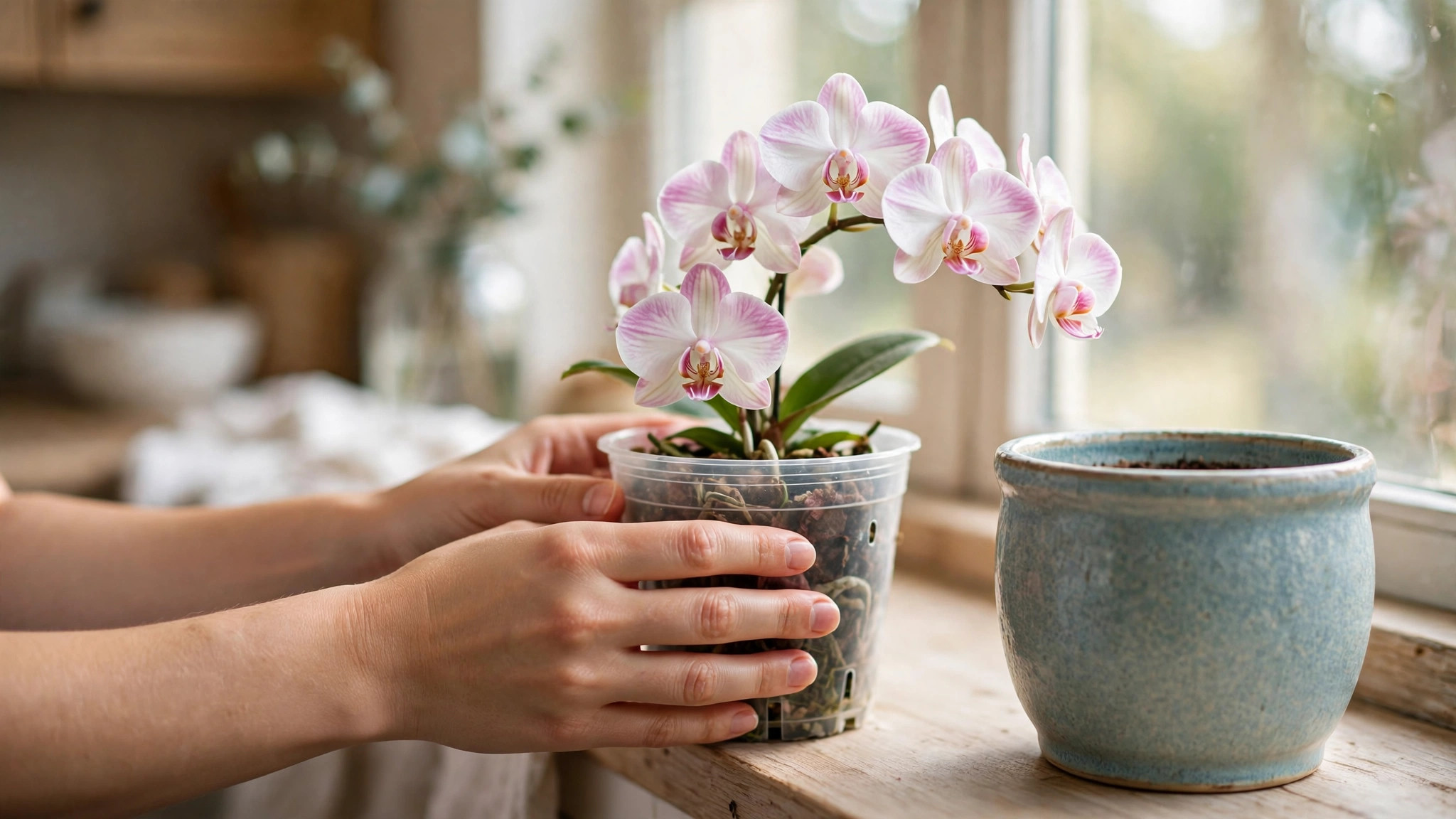
Someone handed you an orchid — wrapped, blooming, beautiful — and somewhere between “thank you!” and setting it on the counter, a quiet worry arrived: please don’t let me kill this one.
Good news: an orchid in full bloom is not asking for much this week. It is asking you not to do too much. Most gifted orchids are moth orchids (Phalaenopsis), and most of them are lost to kindness in the first seven days — watered too often, moved too much, repotted at exactly the wrong moment. Here is the calm version of week one, the way Dorina Benvin — The Orchid Whisperer — teaches it.
Day 1: Unwrap, look, and change nothing
Take off the foil and ribbon, then simply look the plant over.
Check the leaves: they should be firm and green, not wrinkled or yellowing. Check for anything moving — tiny webs, white cottony spots, or specks under the leaves mean the plant should spend its first week or two apart from your other houseplants, just in case.
Then look at the pot. Most gifted orchids live in a clear plastic inner pot inside the pretty decorative one. Lift the inner pot out and look at the roots through the plastic. This is the single most useful habit in orchid care:
- Green roots = the plant drank recently. It is fine.
- Silvery-grey roots = the plant is getting thirsty.
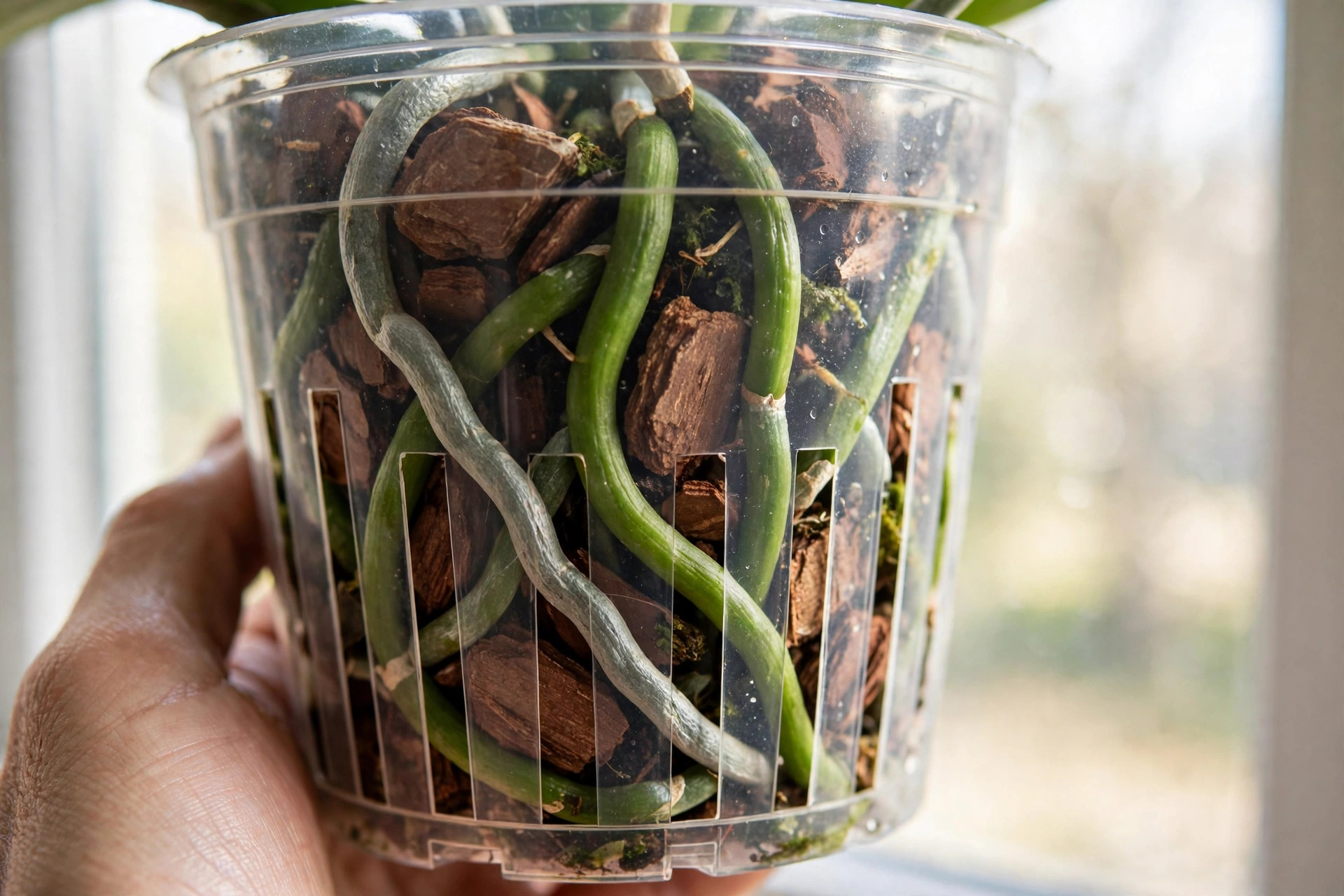
Today, whatever the roots say, do not repot, do not fertilize, and do not water “just to be safe.” Your only job on day one is choosing the spot.
The spot: bright, but not sunbathing
Orchids want the light of a bright room without the sunbeam itself. An east-facing window is ideal; a few feet back from a south or west window works too. Direct midday sun through glass can scorch a leaf in an afternoon, and a scorched leaf never un-scorches.
Keep the pot away from heating and AC vents, and away from the fruit bowl — ripening fruit releases ethylene gas, which can persuade buds to drop before they open. Normal room temperatures, the ones you are comfortable in, suit the plant fine.
Days 2–3: Learn to read thirst before you water
Forget schedules. “Water every Sunday” has ended more orchids than drought ever will, because a plant’s thirst depends on its pot, its bark, and your home’s air. Instead, check:
- The roots — green means wait, silver means soon.
- The medium — push a wooden skewer or your fingertip an inch into the bark. Dry at that depth means watering day is near.
- The weight — lift the pot daily. A freshly watered pot is noticeably heavier. In a few days you’ll feel the difference without thinking about it.
The first watering: soak, drain, done
When the roots are silver and the bark is dry, water like this: set the clear inner pot in a bowl of tepid water for 10–15 minutes so the bark can drink. Then lift it out and let every drop drain away before the pot goes back into its decorative home. Orchid roots rot in standing water — the decorative pot should never become a bathtub.
And a word about ice cubes, because the gift tag may suggest them: orchids are tropical plants, and measured tepid water is the kinder drink. Dorina’s take is simple — skip the ice.
Days 4–7: Resist the upgrades
This is the week of temptations, so here is the whole list of what not to do:
- Don’t repot while it’s blooming. Repotting is for after the flowers finish, or for a genuine emergency. A blooming plant moved to a new pot often answers by dropping its buds.
- Don’t cut the flower spike. While it’s green, it may bloom again from the same spike.
- Don’t fertilize yet. A new plant in a new home needs to settle, not feast. Feeding can start in a few weeks, weakly and occasionally.
- Don’t move it around the house looking for a reaction. Orchids respond in weeks, not hours. Stillness is a care technique.
What you can do: watch. By day seven, look for firm leaves, roots that flush green after watering, and maybe a new root tip — a bright green point nosing into the bark. That is your orchid saying the spot suits it.
Write it down while it’s easy
The growers who succeed with a second and third orchid are not the ones with the greenest thumbs. They are the ones who remember what they did. One line a week — when you watered, what the roots looked like, when a new bud opened — turns guesswork into a record, and a record into confidence.
Start with the free Starter Kit
Find a spot for your new orchid and learn what to check before you water it. Download the free Orchids Mastery Starter Kit.
The free 35-page illustrated guide walks you through the moth orchid’s first weeks — light, watering by the root check, and knowing when a repot is really due: Download the free Starter Kit (also on PayHip).
When you’re ready to go further, Orchids Mastery: The Complete Guide ($19) covers growing, reblooming, repotting, and troubleshooting — and the Deluxe Collection ($39) brings together the complete library, including the My Orchid Story & Care Journal for the weekly notes this article suggests.