A Bird-Friendly Garden: Welcoming Mourning Doves and Songbirds
 By Dorina Benvin & family·July 30, 2026·5 min read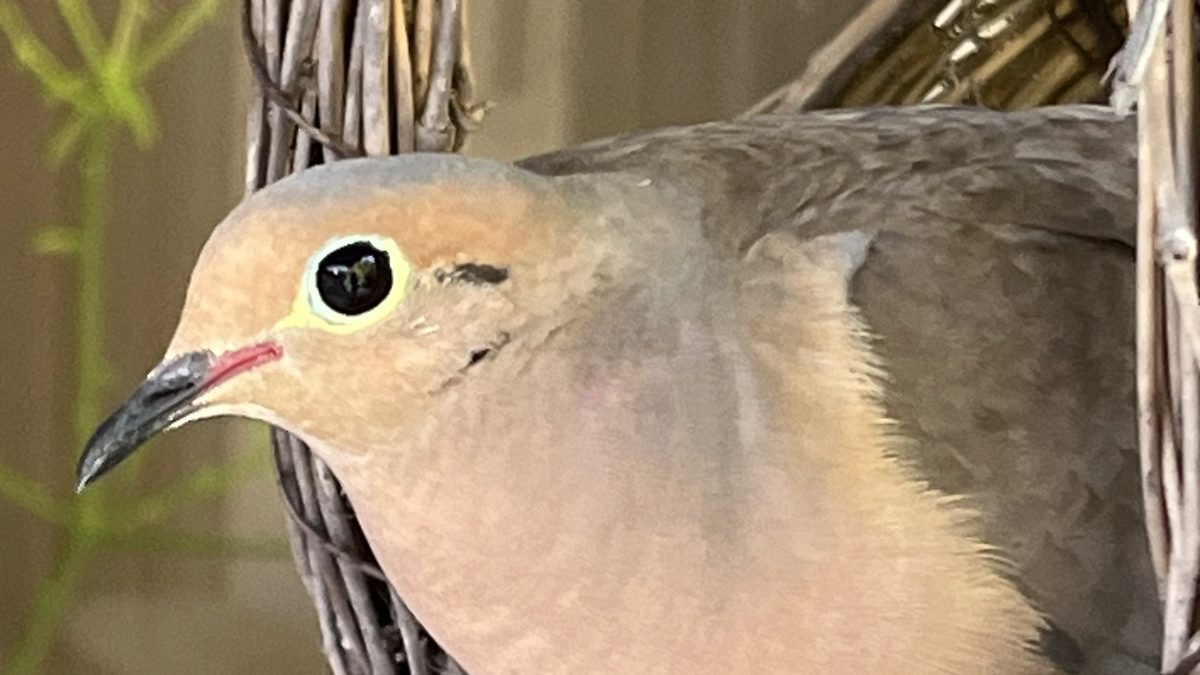
Some guests don’t call ahead. A mourning dove once chose one of Nonna Do’s wicker hanging baskets and made her nest right among the flowers. The family photo of that little dove, eyes bright and feathers the soft color of beach sand, is one of our favorites. It sums up Mom’s garden perfectly: beautiful to look at, and generous enough to share. Here is how to make your own yard a welcoming place for doves and songbirds, and what to do if a dove moves into your flower basket.
Getting to Know the Mourning Dove
The mourning dove (Zenaida macroura) is one of the most widespread and abundant birds in North America. Its name comes from its soft, sorrowful coo-OO-oo-oo-oo call, which people often mistake for an owl. Its Old World cousins are the turtle doves, tortora in Italian and grlica in Croatian.
A few delightful facts:
- Whistling wings. When a mourning dove takes off, its wings make a sharp whistling sound. It’s a built-in alarm that alerts other doves.
- A seed specialist. Its diet is almost entirely seeds, and it forages mostly on the ground. It can pack its crop (a pouch in the throat) with seeds, then fly off to digest them somewhere safe.
- An unusual drinker. Most birds sip and tip their heads back to swallow. Doves can suck water up without lifting their heads.
How Mourning Doves Nest
Mourning doves are famously unfussy builders. The male gathers twigs, grass and pine needles and brings them to the female, who arranges them into a loose, flimsy platform. Sometimes it’s so thin you can see the eggs from below. They happily nest in trees, shrubs, gutters, porch ledges and, yes, hanging planters.
- Eggs: almost always two small white eggs.
- Shared incubation: both parents take turns. Typically the male sits from mid-morning to late afternoon, and the female takes the evening and night shift. The eggs hatch in about two weeks.
- Crop milk: for the first days, both parents feed the chicks crop milk, a rich, protein- and fat-filled secretion from the lining of the crop. Gradually they mix in seeds.
- Fledging: the young leave the nest at roughly 12–15 days old. The parents keep feeding them nearby for a week or two.
- Many broods: in warm regions a pair may raise five or six broods in one season, sometimes reusing the same nest.
A Dove in Your Hanging Basket? Here’s What to Do
If a dove chooses your planter, congratulations: the whole visit, from eggs to fledglings, usually lasts about a month.
- Leave the basket where it is. Don’t move it, turn it or take it down.
- Keep your distance. A startled dove may burst off the nest. Step away quietly and she’ll return. Resist the urge to peek often.
- Never touch the eggs or chicks.
- Water with care. Pour a small amount slowly at the far edge of the basket, away from the nest, or let the flowers go a little dry for a few weeks. Flowers can be replanted. Nestlings can’t.
- Keep pets and people away from the area, especially near fledging time.
- Fledglings on the ground are usually fine. Young doves often spend a day or two hopping about while the parents watch from nearby. Leave them be unless one is clearly injured.
- Clean up afterward. Once the family has gone and hasn’t returned for a while, you can tidy or refresh the basket.
Mourning doves, like most native birds, are protected under the U.S. Migratory Bird Treaty Act, which makes it illegal to disturb or destroy an active nest or its eggs. So patience is kind, and it’s the law too.
Nonna’s Tip: Hang a second basket of flowers somewhere else for yourself. Then you can enjoy blooms and your feathered guests without worrying about the watering can.
Plants That Welcome Birds
The single best thing you can do for birds is plant native plants, the species that grow naturally in your region. They feed the insects that songbirds need. Most backyard songbirds, even seed-eaters, raise their babies almost entirely on caterpillars and other insects, and a single brood of chickadees needs thousands of caterpillars. The National Audubon Society has a native plant database you can search by ZIP code.
| Layer | Examples (choose natives for your region) | What birds get |
|---|---|---|
| Trees | Oaks, native cherries, serviceberry | Caterpillars, berries, nest sites |
| Shrubs | Dogwood, viburnum, elderberry, winterberry holly | Berries, cover, nesting spots |
| Flowers | Coneflower, black-eyed Susan, sunflowers, asters, goldenrod | Seeds in fall and winter |
| Grasses & groundcover | Native bunch grasses | Seeds, nesting material, foraging ground |
A few habits make a big difference:
- Leave seedheads standing through fall and winter instead of tidying everything away. Goldfinches love coneflowers.
- Skip pesticides. They remove the insects birds need and can harm the birds themselves.
- Keep some leaf litter and a brush pile in a back corner for shelter and foraging.
- Plant in layers from tall trees to low groundcover, so every bird finds its level.
If you’d like to go deeper, Bringing Nature Home by Douglas Tallamy is a wonderful, hopeful read about gardening for wildlife.
Water: The Most Overlooked Gift
Birds need water for drinking and bathing all year round.
- Choose a shallow birdbath, about 1–2 inches deep with gently sloping sides, or add a flat stone for footing.
- Change the water every two or three days and scrub the basin regularly to keep it clean and mosquito-free.
- Place it near shrubs so birds can escape to cover, but not so close that cats can hide.
- A dripper or small bubbler attracts birds from surprising distances. In winter, a heated birdbath is a lifeline.
Feeders: A Simple Starter Plan
- Black-oil sunflower seed in a tube or hopper feeder attracts the widest variety: cardinals, chickadees, titmice, nuthatches and finches.
- For doves, scatter white proso millet or cracked corn on a low platform feeder or tray. They prefer to eat at ground level.
- Nyjer (thistle) seed in a finch feeder for goldfinches, and suet in cool weather for woodpeckers.
- Clean feeders every couple of weeks with hot, soapy water or a mild bleach solution (about one part bleach to nine parts water), rinse well and dry before refilling.
- Place feeders either within 3 feet of a window or more than 30 feet away to reduce collisions, and add window decals or screens to glass that birds hit.
- Keep cats indoors. It’s one of the kindest things you can do for backyard birds.
“Food is love. And there’s always enough love for everyone.” — Nonna Do
Mom wrote those words about her kitchen, but they fit her garden just as well.
Nonna’s Takeaway
A bird-friendly garden isn’t about perfection. It’s about generosity: a few native plants, a clean bowl of water, a feeder, and the patience to let a dove raise her family in your flower basket. Mom has always believed that caring for God’s smallest creatures is part of a grateful, joyful life. Start small, share your space, and listen for the whistle of dove wings.
More from our garden: Nonna’s Garden · Growing a Mediterranean Herb Garden in Pots · Family Photos

Mother, Nonna, orchid grower, cook, tailor and artisan — born in Belej on the island of Cres, Croatia. Written with love by her family, sharing the wisdom she gave us. Read her story →