Mali Lošinj: The Island of Vitality Where Nonna's Story Begins
 By Dorina Benvin & family·September 20, 2026·6 min read
Every family story begins somewhere, and ours begins on a sun-washed island in the Adriatic Sea. Nonna Do was born in Belej, a small stone village on the island of Cres, within the Town of Mali Lošinj in Croatia’s Kvarner Gulf. When she talks about home, her voice changes: the scent of pine and sage, the silver-green olive groves, the clear blue water. The Cres–Lošinj archipelago has been called the “island of vitality,” and once you learn its history you understand why. Here is a guide to the place that shaped her, and the traditions she carried with her to America.
Where in the World Is Mali Lošinj?
The Cres–Lošinj archipelago lies in the northern Adriatic, off the coast of Croatia south of the city of Rijeka. Cres is a long, narrow island of rocky hills, sheep pastures and cliffs. At its southern tip it nearly touches Lošinj, and the two are joined at the ancient town of Osor. The Town of Mali Lošinj covers all of Lošinj, the southern part of Cres, including villages like Belej, and a scattering of smaller islands.
A Climatic Health Resort Since 1892
In the late 19th century, when the islands were part of the Austro-Hungarian Empire, doctors and scientists took note of Lošinj’s clean air and mild climate. In 1892 Lošinj was officially declared a climatic health resort, and visitors began arriving to rest and recover, especially from respiratory complaints. Elegant villas and hotels followed, and the tradition of health tourism continues today.
Some of what makes the climate special:
- Around 2,600 hours of sunshine a year, among the sunniest places on the Adriatic
- Mild winters and breezy summers, softened by the sea
- Air scented by pine and aromatic herbs
The Pine Forests of Čikat
Many visitors assume Lošinj’s great pine forests are ancient, but much of the greenery was planted by people. From the late 1800s, the botanist and teacher Ambroz Haračić initiated the planting of pine trees at Čikat, the bay just outside Mali Lošinj town. The forests grew into the shady, fragrant parkland that now lines the coast, with walking paths running beneath the trees down to pebble beaches.
An Island Garden of Herbs
The archipelago is a botanist’s delight, with more than 1,000 plant species, including around 230 medicinal herbs. Sage, rosemary, immortelle, lavender, myrtle and wild fennel grow in the stony soil. In Mali Lošinj, an aromatic garden showcases hundreds of fragrant and useful plants, and local herbs find their way into oils, soaps, liqueurs and teas.
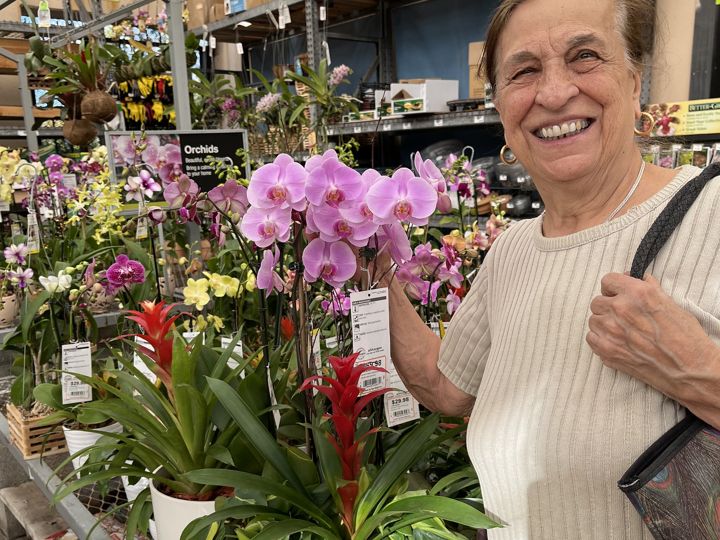
It is no surprise that Nonna became such a devoted gardener and orchid grower. She grew up surrounded by plants. See our garden page for how she brings that Mediterranean spirit to her pots at home.
Dolphins of the Lošinj Archipelago
The waters around Lošinj are home to a resident population of bottlenose dolphins, one of the best-studied in the Mediterranean. The Blue World Institute, based in Veli Lošinj, has researched them for decades and runs the Lošinj Marine Education Centre, where visitors can learn about dolphins, sea turtles and marine conservation. If you take a boat trip, choose an operator that follows responsible dolphin-watching guidelines: keep your distance, go slowly and never feed or chase them.
The Apoxyomenos: An Athlete From the Sea
One of the most remarkable archaeological finds in the Adriatic came from these waters. The Apoxyomenos, a life-size ancient Greek bronze statue of an athlete scraping oil and dust from his skin, was discovered on the seabed near the islet of Vele Orjule and raised in 1999. After years of careful restoration it came home to the Museum of Apoxyomenos in Mali Lošinj, which opened in 2016. The museum is designed as a gentle, contemplative journey, leading you step by step to the statue itself.
Cres: Griffon Vultures, Osor and the Villages
Cres has its own wild beauty. The island is known for its colony of griffon vultures, large birds with wingspans of well over two meters that nest on the sea cliffs. Conservation work on the island helps protect them, and in the north of Cres, a visitor centre in the village of Beli tells their story.
At the southern tip of Cres lies Osor, an ancient town that was once a major power in the region. A narrow canal here separates Cres from Lošinj, crossed by a swing bridge that opens at set times to let boats pass. Watching the bridge swing open is a small island ritual.
Belej: Nonna’s Village
Belej sits in the southern part of Cres, a quiet village of stone houses, dry-stone walls and olive groves. Life there was built on olives, sheep, gardens and the sea. Stone, sun and simple food: it is easy to see where Nonna’s love for olive oil, homemade bread and hard work began. Our Lošinj page collects more about the islands and the family’s roots.
A Proud Maritime Heritage
Lošinj has long been an island of sailors. In the 19th century, Mali Lošinj and Veli Lošinj were busy centres of shipbuilding and seafaring, with shipyards launching sailing ships and local sea captains sailing the world. Their handsome captains’ houses and villas still line the harbours, and seafaring remains part of the islands’ identity.
“Good things take time — especially soups.” — Nonna Do. Island life taught patience: olives ripen slowly, and the sea keeps its own schedule.
Plan a Visit
| Tip | Details |
|---|---|
| Getting there | Car ferries connect the mainland and nearby Krk to Cres; drive south across the Osor bridge to Lošinj. Passenger catamarans also link Rijeka with Cres and Mali Lošinj. |
| Best time | Late spring (May–June) and early autumn (September) are warm, green and less crowded. |
| Getting around | A car is easiest for Cres villages; Mali and Veli Lošinj are walkable, linked by a scenic coastal path. |
| Don’t miss | Čikat pine forest, the Museum of Apoxyomenos, the Lošinj Marine Education Centre, Osor, the aromatic garden. |
| Eat | Fresh fish, Cres lamb, olive oil, wild asparagus in spring, and local herbs. |
Check current ferry schedules and opening times before you go. The official Lošinj tourist board is the best place to start.
Nonna’s Tip: Walk the coastal path from Mali Lošinj to Veli Lošinj in the early morning, when the pines smell strongest and the sea is like glass.
A Mini Croatian Phrase List
A few words go a long way, and locals appreciate the effort. Many people in the area also speak Italian.
| English | Croatian | Say it like |
|---|---|---|
| Hello / Hi | Bok | bohk |
| Good morning | Dobro jutro | DOH-broh YOO-troh |
| Good day | Dobar dan | DOH-bar dahn |
| Thank you | Hvala | HVAH-lah |
| Please | Molim | MOH-leem |
| Goodbye | Doviđenja | doh-vee-JEH-nyah |
| Enjoy your meal | Dobar tek | DOH-bar tek |
| The sea | More | MOH-reh |
| Island | Otok | OH-tok |
| Cheers! | Živjeli! | ZHEE-vyeh-lee |
For many more, see our post Learn with Nonna: 60 Everyday Phrases.
Nonna’s Takeaway
Mali Lošinj and Cres are more than beautiful islands. They are a way of life: clean air, sunshine, fragrant herbs, olive trees and the rhythm of the sea. Nonna brought that spirit with her to America, and it lives on in her cooking, her garden and her smile. If you ever visit, walk under the pines of Čikat, taste the olive oil, and think of a little girl from Belej who grew up to feed a whole family with love.
More from our roots: Lošinj & Heritage · Croatian Coastal Cooking · Nonna’s Kitchen
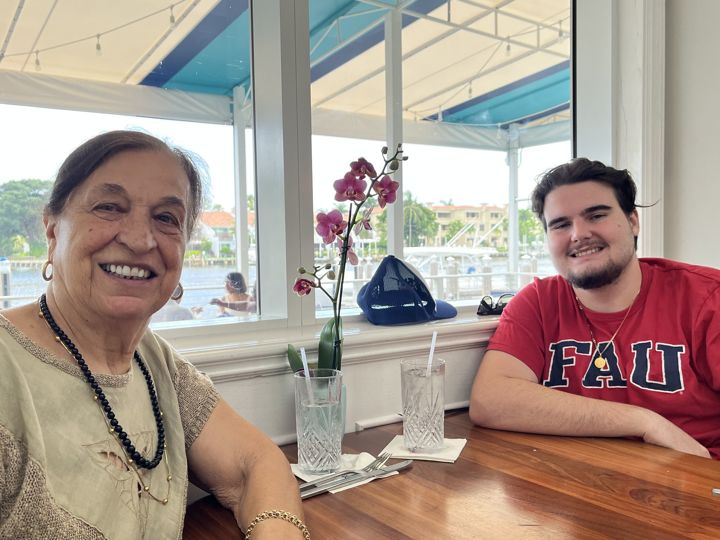
Mother, Nonna, orchid grower, cook, tailor and artisan — born in Belej on the island of Cres, Croatia. Written with love by her family, sharing the wisdom she gave us. Read her story →