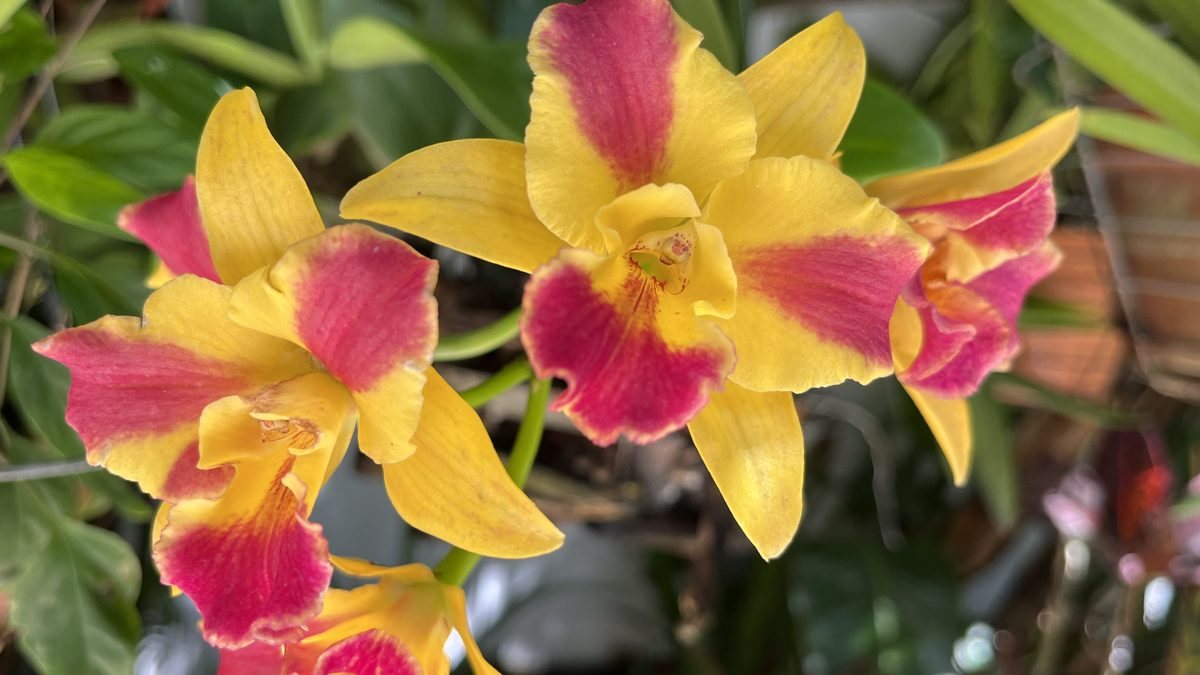
There are roughly 28,000 orchid species in the world, more than all the bird and mammal species put together, and well over 100,000 registered hybrids. It’s no wonder a garden center orchid display can feel overwhelming! Nonna Do’s windowsills hold a happy mix: elegant moth orchids, a fragrant yellow-and-magenta Cattleya, spidery Brassias, dancing Oncidium hybrids and cascading Dendrobiums. “Know the orchid,” she writes in The Art of Orchids, “and you know how to help it bloom.” Here’s your passport to the main types.
First, Two Ways Orchids Grow
Knowing how your orchid grows explains most of what it needs.
- Monopodial orchids grow from a single upright stem, adding leaves at the top. Examples are Phalaenopsis and Vanda. They don’t divide. Instead they sometimes make keikis (Hawaiian for “baby”).
- Sympodial orchids spread sideways along a creeping stem called a rhizome, sending up new growths each year. Examples are Cattleya, Oncidium, Brassia and Dendrobium. Many store water in swollen stems called pseudobulbs or canes, so they can handle drying out a little between waterings.
Phalaenopsis: The Moth Orchid
“Graceful, forgiving, the gentle beauty of the orchid world.”
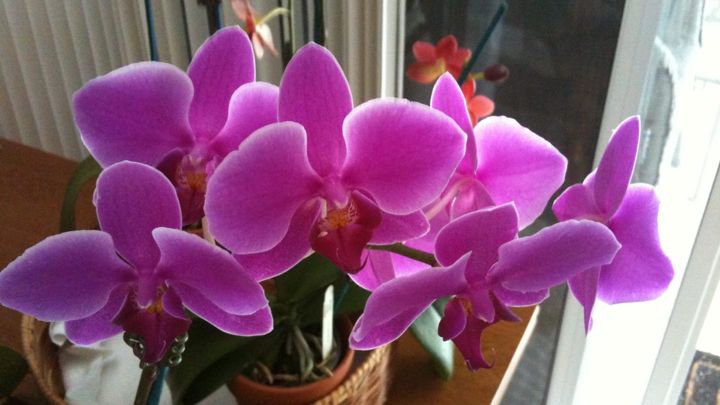
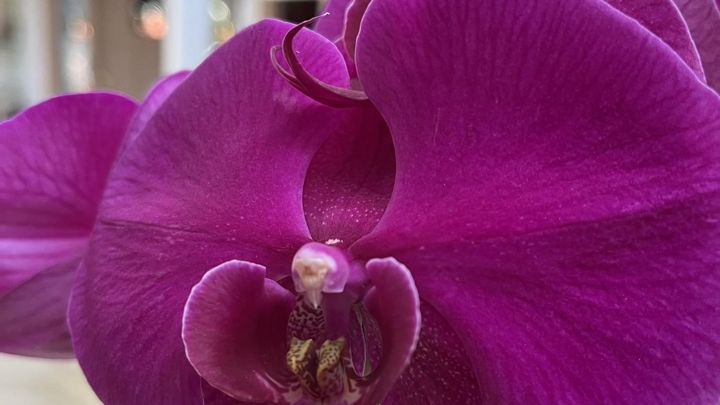
Native to Southeast Asia and nearby islands, Phalaenopsis are the world’s most popular orchids, and the one Mom recommends to every beginner. The flowers can last two to five months. They’re happy in the same temperatures people like and bloom readily again with a little encouragement.
- Light: bright, indirect; an east window is perfect
- Water: when the roots turn silver
- Rebloom trigger: a few weeks of cooler autumn nights
- Dorina’s note: don’t cut a green spike off at the base. It may bloom again from a lower node.
Cattleya: The Queen of Orchids
“A Cattleya doesn’t whisper—it sings.”
From Central and South America, Cattleyas are the classic corsage orchids, with ruffled lips, big flowers and often a wonderful fragrance. Most sold today are hybrids combining Cattleya with related genera, often labeled Rlc. (Rhyncholaeliocattleya). They come in extraordinary colors. One of Mom’s favorites is a sunny yellow Cattleya with magenta “splash” petals. Splash-petal types carry the rich color of the lip out onto the tips of the petals, as if someone painted them with a brush.
- Light: bright; more than Phalaenopsis. Leaves should be a light, slightly yellow-green.
- Water: let it dry out almost completely. The pseudobulbs store water.
- Blooms: usually once a year from the newest growth, lasting one to three weeks, and worth every day
- Tip: not enough light is the number-one reason a Cattleya won’t bloom.
Oncidium and the Oncidium Alliance: Dancing Ladies
“Oncidiums bloom like laughter—joyful and full of movement.”
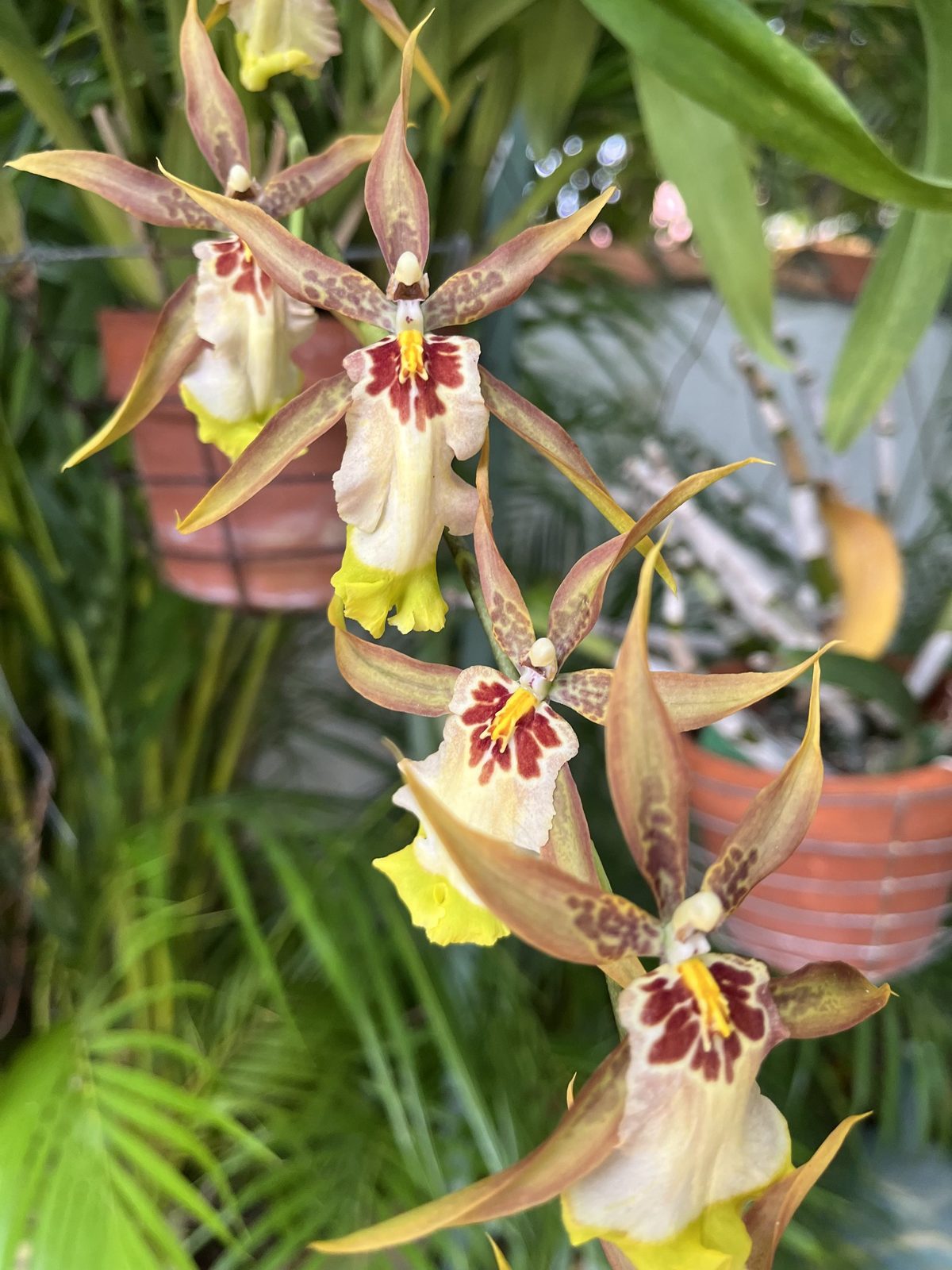
Oncidiums, from the tropical Americas, produce branching sprays of dozens of small flowers, often yellow with brown markings, that look like tiny dancers in full skirts. The famous hybrid Oncidium Sharry Baby smells like chocolate.
The Oncidium “alliance” is a big family of related orchids that breeders love to cross. You’ll see hybrids sold under names like Brassidium, Miltassia, Beallara or Wilsonara, and many more are simply sold as “Cambria”-type orchids. Botanists have recently renamed a lot of these plants, so the tags can be confusing, but their care is similar. Mom grows several of these hybrids, and each one seems to have its own personality.
- Light: medium to bright, indirect
- Water: keep lightly moist; don’t let them go bone-dry. Pleated or wrinkled new growth is a sign of thirst.
- Water quality: sensitive to salts, so use rainwater or filtered water and flush monthly
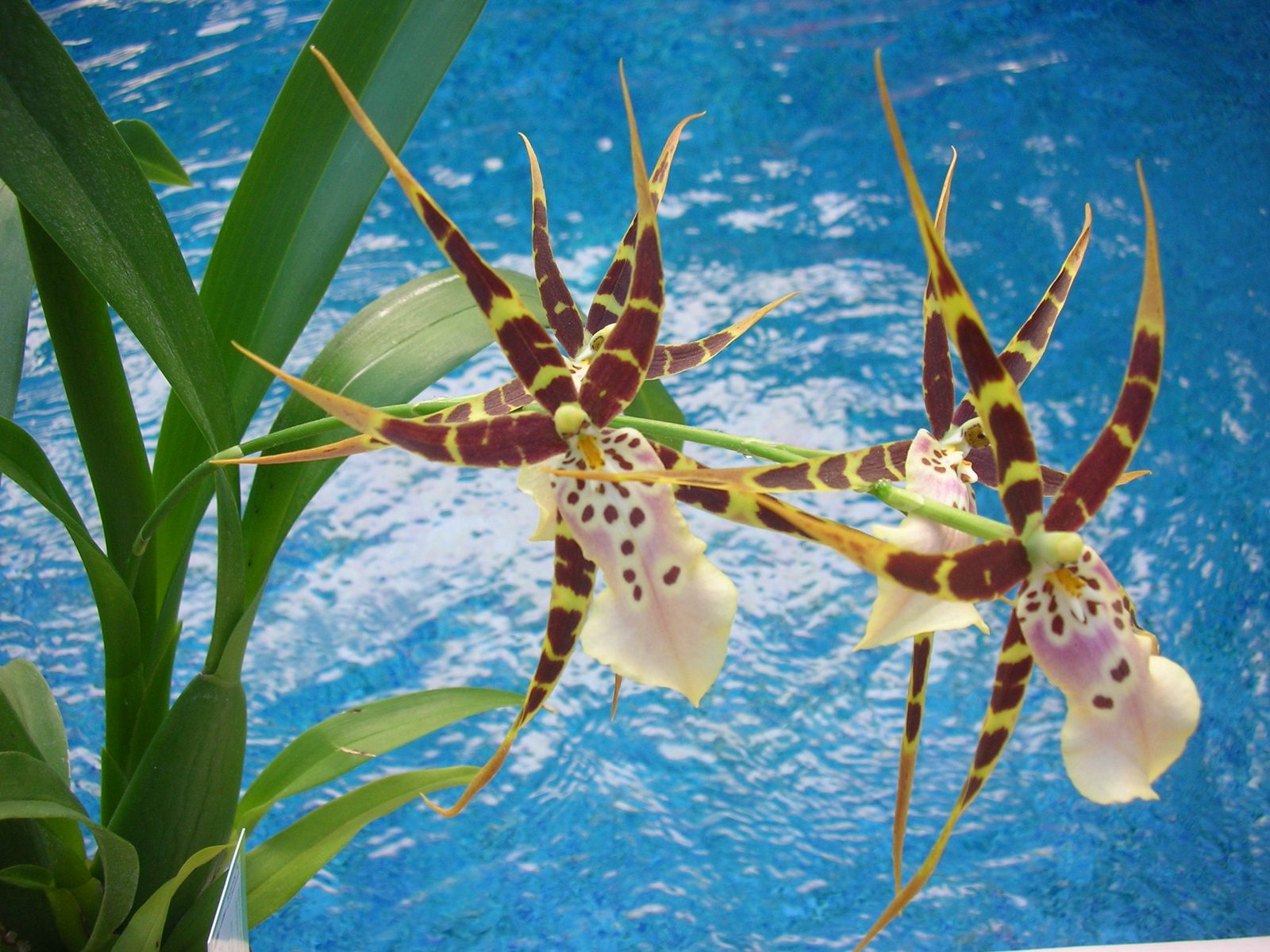
Brassia: The Spider Orchid
Brassias, part of the Oncidium alliance, earn their nickname with long, slender petals and sepals that can stretch several inches, speckled like spider legs. In the wild their shape is thought to lure hunting wasps that mistake the flower for prey. It sounds alarming, but the flowers are elegant, often lightly fragrant, and last several weeks on arching sprays.
- Light: bright, indirect; a little gentle morning sun is welcome
- Water: like Oncidium, keep evenly moist, never soggy
- Temperature: intermediate to warm; they appreciate a slight night drop
- Tip: Brassia hybrids such as Miltassia and Brassidium are often even easier than the species.
Nonna’s Tip: Group your Oncidium-alliance orchids together on a pebble tray. They share the same love of humidity and gentle, regular watering, so one routine keeps them all happy.
Dendrobium: Canes and Cascades
“Dendrobiums are sculptors—creating beauty along every cane.”
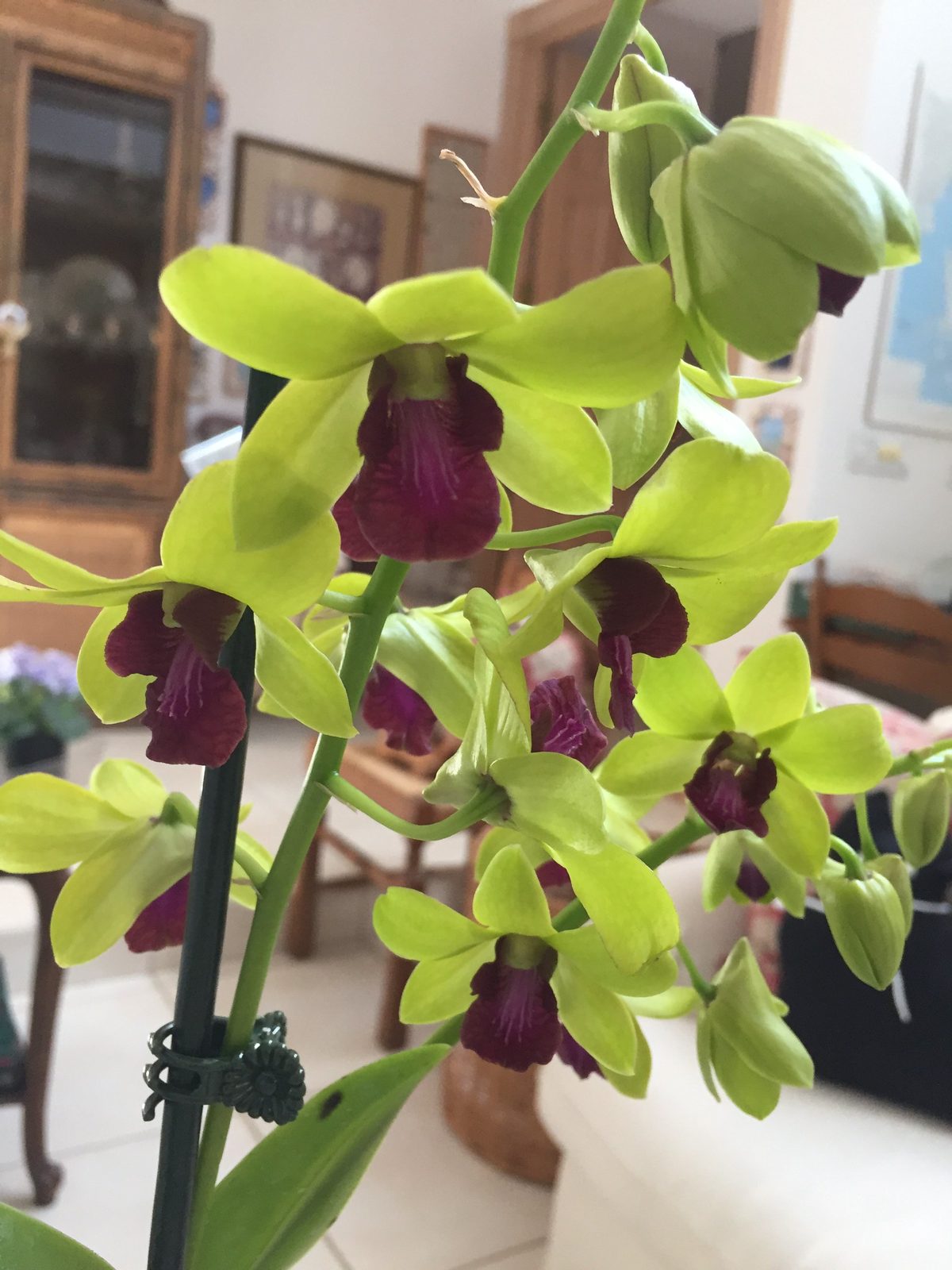
Dendrobium is one of the largest orchid genera, native from Asia to Australia and the Pacific, and its members have very different needs. Most grow from tall, jointed stems called canes. The three types you’re most likely to meet:
Phalaenopsis-type Dendrobiums
Upright canes with sprays of long-lasting flowers, familiar from florist shops and leis. They like warmth year-round, so no cold rest.
Nobile-type (Soft-cane) Dendrobiums
Flowers pop out all along the canes like a garland. They need a cool, drier winter rest to set buds. Without it they tend to produce baby plants (keikis) instead of flowers.
Dendrobium anosmum
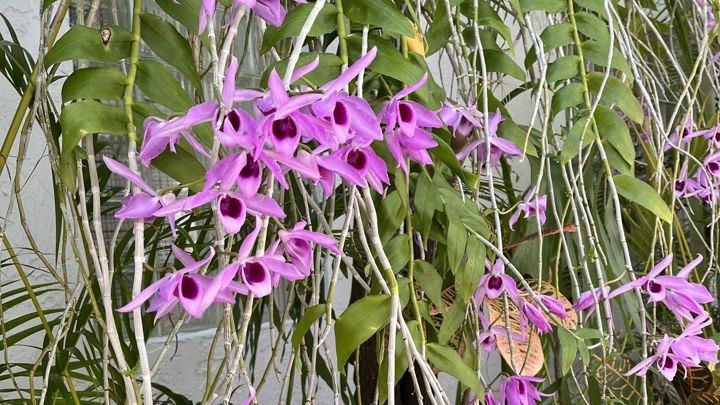
One of Mom’s treasures. Its long canes hang down, so it’s best grown mounted or in a hanging basket. It grows lush and green in summer, with generous water and feeding, then drops its leaves in autumn. Through winter it rests cool and much drier. In spring, magenta-pink flowers open all along the bare canes, and they are powerfully fragrant. Its name ironically means “without scent.” Don’t cut off the old leafless canes! They can flower again and often produce keikis.
Quick Comparison Chart
| Orchid | Light | Water | Day / night temperature |
|---|---|---|---|
| Phalaenopsis | Bright, indirect (east window) | When roots turn silver | 70–85°F / 60–65°F; cooler autumn nights spark spikes |
| Cattleya & hybrids | Bright; some gentle direct sun | Dry almost fully between | 70–85°F / 55–65°F |
| Oncidium alliance | Medium–bright, indirect | Evenly moist, never soggy | 65–80°F / 55–65°F |
| Brassia (spider orchid) | Bright, indirect | Evenly moist | 65–85°F / 55–65°F |
| Dendrobium, phalaenopsis-type | Bright | Moderate year-round | 70–90°F / 60–65°F (no cold) |
| Dendrobium nobile | Bright | Generous in summer; sparse in winter | 65–80°F / 50–55°F in winter rest |
| Dendrobium anosmum | Bright, filtered | Heavy in summer; very little after leaf drop | Warm summers / 50–60°F winter nights |
(Fahrenheit shown; 55°F ≈ 13°C, 65°F ≈ 18°C, 85°F ≈ 29°C.)
Also Worth Knowing
- Paphiopedilum (slipper orchid): lower light, evenly moist; great for a north or east window.
- Vanda: very bright light, warmth, daily watering, often grown bare-root.
- Cymbidium: bright light and cool nights (45–55°F) in autumn to start spikes; loves a summer outdoors.
- Miltoniopsis (pansy orchid): cool, moist, medium light, with flowers that look like smiling faces.
Want to go deeper? Wikipedia’s page on the orchid family explains the botany, and the American Orchid Society has species care sheets.
“Every orchid has a soul. Learn its story, and it will share its beauty with you.” — Nonna Do
Nonna’s Takeaway
Start with a Phalaenopsis. Once you’ve rebloomed it, you’ll be ready for a Cattleya’s perfume, an Oncidium’s dance and a Dendrobium’s cascade. Whether you say orchidea in Italian or orhideja in Croatian, the secret is the same: match the plant to your space. For the basics, read Dorina’s 10 Golden Rules. When your orchid outgrows its pot, turn to our repotting guide.
Keep exploring: Nonna’s Orchid Corner · How to Make Orchids Rebloom · Family Photos

Mother, Nonna, orchid grower, cook, tailor and artisan — born in Belej on the island of Cres, Croatia. Written with love by her family, sharing the wisdom she gave us. Read her story →